

How To Use Nikon D200 As A Video Camera
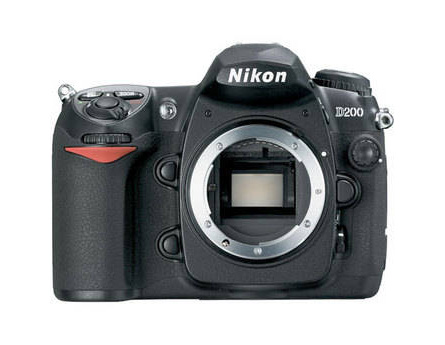
Nikon D200 custom settings
The Nikon D200 has been described equally the 'D2x Lite', because information technology has about of the best features of the awesome D2x and added a few new features into the mix. Therefore this page is like to the page on the D2x custom settings.
Here are my preferences for the Custom Settings .. and why.
The Custom Functions are grouped into half-dozen categories:
a – Autofocus
b – Metering / Exposure
c – Timers / AE & AF Lock
d – Shooting / Brandish
e – Bracketing / Flash
f – Controls
a1 .. AF-C mode priority
AF-C is the Continuous Focusing mode, where the shutter can be tripped whether the bailiwick is in focus or not, ie, Release Priority. With this setting, y'all can turn AF-C into Focus Priority.
default : Release button (ie, FPS is maintained),
my preference : default, (Release priority).
There are mostly two ways that machine-focusing are used –
– Continuous Focusing, with the focusing enabled on the rear
AF-ON button. (See custom office a6.) This enables the lensman to apply follow focus, and utilise the AF-ON button as a way of holding focus if necessary (by letting go of the AF-ON button). This is the manner that well-nigh sport photographers employ AF.
With this setting the photographer has a very powerful option – to modify the usual beliefs of AF-C mode in only tripping the shutter when the subject is in focus. Although, that said, I am non sure information technology is how most photographers would desire to use Continuous Focusing.
Activity photographers usually demand the camera to accurately runway the subject area, and the shutter to fire when the photographer wants, without the camera deciding otherwise.
a2 .. AF-Southward mode priority
AF-S is the Single Focusing mode, where the shutter can only exist tripped whether the subject field is in focus, ie, Focus Priority.
With this setting, yous can turn AF-Due south into Release Priority.
default : Focus Priority,
my preference : default.
My preference is for the camera's shutter to only burn down when I've caused focus. And then I can lock focus past keeping the shutter button slightly in – allowing me to recompose the picture show.
As an aside .. with previous generations of Nikon cameras, my preference was for the photographic camera to be set to AF-Southward mode, and with Unmarried Frame Accelerate, since this way it allowed me to focus on a subject, re-frame, and shoot a sequence with that signal of focus locked by the shutter push button. (If I had my camera set to Continuous Frame Advance without selecting AF-ON activation, then the photographic camera would've re-focused after the first photo was taken, and I will need to go through the routine again to lock focus, re-frame and shoot.)
a3 .. Focus Surface area Frame
With this setting the shape of the group of the auto focus sensors are controlled in Grouping Dynamic AF – also equally whether the central sensor is given preference, or the field of study that is closest to the camera is given preference.
default : Normal frame (eleven surface area),
my preference : default.
This custom function is entirely dependent on the individual lensman's style and needs.
a4 .. Group dynamic AF
With this setting the shape of the group of the auto focus sensors are controlled in Group Dynamic AF – likewise as whether the primal sensor is given preference, or the subject area that is closest to the camera is given preference.
default : Design 1,
my preference : default.
This custom function is entirely dependent on the individual photographer's style and needs. And the way this office operates also makes more than sense in conjunction with the user manual.
a5 .. Lock-On
With this choice y'all tin control whether Focus Tracking is disabled with Lock-On.
default : Normal,
my preference : default.
This setting controls the behavior of AF-C way in that the camera allows for sudden changes in the subject field movement.
The all-time resource on the implications of this setting, tin can exist institute on Digital Darrell's website: Lock On – Does it Work?
(This is for the D2x, just it relates direct to the D200 too.)
a6 .. AF activation
With this setting you lot dictate whether auto-focusing is initiated via either the shutter button or the AF-ON button, or merely the AF-ON push button.
default : shutter button / AF-ON,
my preference : default.
The choice here is closely linked to how you lot prefer activating car-focus and your choice of focusing way (AF-C or AF-S), since the behaviors of each manner changes slightly whether yous focus with the shutter button or the AF-ON button.
I adopt the default considering I mostly use my camera in AF-S focusing mode, and employ my shutter button to activate and concur auto-focus.
Most sport photographers however, employ the AF-ON push to activate auto-focus. Setting custom function a5 to AF-ON, makes most sense if you use Continuous Focusing mode (AF-C), since this setting will then allow yous to lock focus by simply releasing the AF-ON button.
With Nikon'southward cameras, when you utilize AF-S focusing way, you will need the camera to reach focus before it volition burn in AF-Due south mode, if you focus with AF-ON. This makes information technology (for me at least), a clumsy mode of using auto-focus.
a7 .. AF Area Illumination
This option controls whether the agile focus expanse is illuminated in red in the viewfinder.
default : Automobile,
my preference : ON.
I like having information technology on – then it is immediately obvious at all times exactly where the photographic camera is focusing.
a8 .. Focus Area
This setting controls whether the focusing sensor choice wraps around, or non.
default : OFF,
my preference : default.
a9 .. AF Assist
This option controls whether the motorcar-focus assist low-cal comes on in low light to help motorcar-focus latch onto the subject.
default : ON,
my preference : OFF.
The brilliant lamp light tin be abrasive and intrusive at inopportune moments, so I keep information technology switched off.
a10 .. AF-ON push for MB-D200
The functions assigned to the Vertical AF-ON button are determined with this custom setting.
default : AF-ON + focus area,
my preference : default.
The default here makes the about sense. Information technology allows yous to command the positioning of the agile car focus sensor, too every bit initiate auto focus. If you don't utilise the AF-ON push button at all to initiate auto focus, and then yous can set this option to only allow control of the auto focus sensors with the vertical AF-ON button.
b1 .. ISO auto
This setting allows the camera to automatically arrange the ISO upwards if the camera decides that proper exposure can't be achieved at the electric current exposure settings.
My recommendation with the D2x was to keep this OFF, because of the simplistic way information technology was implemented.
Only with the D200 and the D80, the ISO machine setting has become flexible enough to exist more generally used.
default : OFF,
my recommendation : OFF, unless you have a specific need for information technology.
With the Car ISO setting ON, you volition come across a problem with your photographic camera if you use transmission metering mode. Auto ISO will override your manual metering settings every fourth dimension if it is any dissimilar from what the camera'southward meter says – thereby completely negating the very reason for Transmission Metering's existence.
This volition obviously cause problems likewise when Motorcar ISO is used with studio lighting. Since there is no way for the camera to know what you are doing with the studio lights, the photographic camera's metering volition perceive in that location not to be enough bachelor calorie-free to take the photograph nether the specific settings – and it volition crash-land up the ISO in an try to get 'correct' exposure. This causes major over-exposure with the studio lights. If yous were metering for 200 ISO with your flash meter, and the camera bumps your ISO to 1600, and then your photos will be over-exposed by three stops.
The D80 has an interesting and potentially useful application of the Auto ISO characteristic, where the camera volition bump upwards the ISO to try and become a minimum shutter speed – while still keeping the ISO to a maximum that you're happy with.
This could be quite useful in helping to eliminate camera milkshake or subject movement, by having the camera automatically conform the ISO. This might be a feature worth trying out, but merely make sure that the Automobile ISO feature doesn't make your exposure metering inconsistent in manual metering.
There are 2 other scenarios where you might want to consider Auto ISO.
- If you lot should need a very specific shutter speed and aperture, which you then set in manual metering style. Then, to accommodate lighting changes, you could have the camera arrange the ISO automatically to friction match the meter reading at that bespeak.
- Too, if in Shutter Priority manner, if you wanted to work only within a certain range of apertures, y'all could employ Machine ISO to keep your auto exposures correct when you move out of the range of possible apertures.
But these would be unusual situations, and for all applied purposes, I would even so recommend that the ISO Auto setting exist set to OFF.
b2 – ISO step value
This custom setting controls whether the shutter speed / discontinuity increments are in full or 1/two or one/3 steps.
default : 1/3 stride,
my recommendation : 1/3 step.
Decision-making the ISO is as of import equally controlling discontinuity and shutter speed in getting to the correct exposure. Since an increase in ISO ways an increase in noise, information technology makes sense to have the ISO increments as pocket-sized as one/third cease to brand for incremental jumps in adjustment.
b3 .. EV footstep
This custom setting controls whether the shutter speed / aperture increments are in full or 1/2 or 1/3 steps.
default : 1/3 pace,
my recommendation : 1/three pace.
This one is personal preference. I accept mine set to i/third steps, considering information technology allows better fine tuning of exposure and exposure compensation – which is essential with digital capture. However, I tin meet how it might be easier or more convenient in some cases to be able to gear up 1/ii stop apertures and shutter speeds.
b4 .. Exposure comp. EV
This custom setting controls whether the exposure bounty increments are in total or 1/2 or 1/3 steps.
default : 1/3 step,
my preference : 1/3 footstep.
Again, this is entirely personal preference. Setting exposure compensation in wider steps than 1/iii stop settings might brand bracketing over a wider rage easier, but I still think that using 1/3rd stop increments permit for finer tuning of exposure.
b5 .. Exposure comp.
This custom setting dictates whether the [+/-] is needed besides to dial in exposure compensation, or whether exposure compensation tin can exist dialed in with the CMD dial only.
default : [+/-] & CMD dial,
my preference : go along it to the default.
If this setting is inverse from the default, then a simple twiddle of the dials will change exposure compensation – very bang-up, but all as well easy to do by accident when using the camera in solar day to day photography. It's just safer to keep it to the default, where there is an extra safeguard in that the [+/-] button has to be pushed as well, before exposure bounty can be set.
Since I nearly always shoot in Manual Exposure mode anyway, this setting wouldn't bear on my normal operation of the camera. But I can see how this setting would be of real value to someone who shoots constantly in a specific auto mode such as Aperture Priority, where fast admission to exposure compensation would be of bully help.
b6 .. Center weighted metering
This custom setting controls the size (and hence precision) of the heart-weighted metering option.
default : 8mm,
my preference : 8mm.
This very useful setting allows you to set up the metering area wider or much narrower for center-weighted metering. At the narrowest setting it acts like a broad spot-meter reading – not as highly selective equally a spot-meter reading, but still precise enough to make specific meter readings off a scene.
Exactly how wide or tight you set the metering blueprint is upward to personal preference, but my feeling here is that anyone who has a precise approach to exposure metering, would select 1 of the smaller areas as a default.
b7 .. Fine Melody Optimal Exposure
This custom setting is a very powerful tool. Many photographers desire their images to be brighter or darker than the photographic camera gives at the correctly metered default. With this setting you can bias the exposure without having the exposure compensation warning. ie .. this is similar permanent exposure compensation built in for each of the metering modes.
default : NO,
my preference : default.
I personally like the way that the Nikon cameras meter, which tends to give more saturated images. This also helps protect the highlights with digital photography. But this actually is a setting which elevates this camera out of the ordinary, allowing unprecedented command over exposure. Every photographer can now fine-tune the photographic camera's metering to his / her own taste.
c1 .. AE Lock
This option controls whether exposure will lock while the shutter-release is pressed half-mode, or but with the AE-Fifty/AF-L button.
default : AE-L Button
my recommendation : continue to the default.
The default makes sense hither, since the other option is to have the shutter button piece of work as the exposure lock, which can be confusing, since it links the point of focus to the place you meter – which should not exist thought of as the same thing, since information technology isn't.
With this default, Nikon is essentially disagreeing with its ain default for selection c2, because now they see the need to keep focus and exposure lock separate. And that'south the fashion information technology should be.
c2 .. AE-L / AF-L
This setting controls the behavior of the AE-Fifty / AF-L push.
default : AE/AF Lock,
my recommendation : annihilation other than the default.
my preference : AE Lock
Exposure and Focus lock should not be linked. They accept null to do with each other, since the point that you meter off is about likely non to be the same betoken you are focusing on. You really don't want to limit yourself past having the AE Lock button to also be your Focus Lock. Either employ the AE/AF Lock button every bit an AE Lock .. or .. an AF Lock, but not both at the aforementioned fourth dimension.
Which setting you choose depends entirely on your shooting manner. If you lot use Continuous Focusing ofttimes, then it makes sense to use this button as an AF lock or set up as the AF-ON choice (which will remove the focusing activity from the shutter button.
My preference is to utilise this push as the AE lock exclusively. I merely shoot in Single-frame and Single-Servo AF since this combination allows me to apply the shutter push button as a focus lock between frames.
c3 .. Auto meter Off
This setting controls how long your camera'due south meter reading is displayed in the viewfinder and on meridian of the camera.
default : 4 secs,
my preference : 16 secs.
One time again, this setting is entirely personal preference, only I like my meter reading to not disappear and then soon after I active it with the shutter button. The battery of the D200 is long-lasting enough that the pocket-sized bit of power-saving past having a short meter display period, is off-set by the badgerer of having to press the shutter button repeatedly when taking meter readings.
c4 .. Cocky-timer
This setting controls how long the self-timer takes earlier tripping the shutter.
default : ii secs,
my preference : 2 secs.
This setting should exist upward to personal preference, just I like a shorter self-timer setting, since I mainly use this to stabilize the camera from vibrations when working with the the camera on a tripod.
c5 .. Monitor Off
With this setting you control how long the LCD display stays up.
default : 10 secs,
my preference : 1 min.
I'm an incorrigible chimper. I like seeing what I merely photographed, and also, the histogram and blinking highlights are indispensable tools. Therefore I *need* to chimp. Having a much longer LCD display time helps. Likewise, others ordinarily want to see what you lot just shot.
d1 .. Beep
This controls how loud / soft the camera beeps … or not, when acquiring focus or when using the cocky-timer. It is also used for a low shutter speed warning.
default : loftier,
my preference : off.
Personal preference again, only I prefer my camera to be quiet.
But I have to admit that the soft beep isn't intrusive at all.
d2 .. Grid Display
This allows a grid pattern to exist displayed in the viewfinder.
default : OFF,
my preference varies.
This one is personal preference. The display isn't intrusive, and it is a useful guide to have as a reference to go along verticals and horizontals correct.
d3 .. Viewfinder alert
This custom setting enables or disables warnings in the viewfinder.
default : ON,
my preference : default.
This one is personal preference. But it makes sense to have a visual reminder of certain things, such as having gear up the camera to B&W mode.
d4 .. Shooting Speed
This setting controls the maximum frame rate when the camera is set to CL (continuous low-speed).
default : 3 fps
my preference : the default.
I don't often shoot in Continuous frame-advance, since I prefer the Unmarried Frame manner. Activity photographers volition ready this option to their own requirements.
d5 .. Exposure Delay Way
The shutter release is delayed by 0.iv sec from the moment you press the shutter button.
default : off,
my preference : default.
This option is essential for photographers who shoot at tiresome shutter speeds or exercise high-magnification work such as macro photography. The mirror flipping up causes a lot of internal vibrations, and this 'mirror slap' can cause photographs to show camera shake. With this setting, the mirror is flipped up instantly every bit yous press the shutter button, but the shutter itself only opens 0.4 seconds later when the vibrations from the mirror flipping up, has been damped.
d6 .. File Number Sequence
This default chooses whether the file names reset to 0001 every time yous utilise a new CF card or new binder, or whether the photographic camera remembers the last file name used and go on numbering sequentially from there on.
default : OFF,
my recommendation : ON.
This is one of the settings which I recommend exist changed from the default.
File No. Seq OFF – will name the prototype files the same every fourth dimension you lot use a new memory card or a clean memory card. The file naming will resume from the last image recorded on the memory card. This means that if you lot use more than ane memory card, you will take duplicate file names. Even if you simply apply one memory carte du jour, y'all run will most likely go to the signal where you lot accept to rename image files continually on your computer.
File No. Seq ON – will resume file naming from the final name used. So if you use more than ane memory card, the file names volition be dissimilar from each other on the unlike memory cards. This will relieve you lot the bother of having to rename files when you download it on the calculator, or of having to keep image files from different memory cards in unlike folders in your figurer.
Although, that said, I rename my files to more logical file names, equally a thing of course on downloading my CF cards.
d7 .. LCD Illumination
This option controls whether the LCD lights upward simply when the ability switch is rotated to the lamp position, or when any push button is pressed.
default : Off,
my preference : On.
I most frequently work in dim areas, and I want to be able to read my LCD without having to precisely select the Lamp button. With this part selected, the LCD will low-cal up whenever I striking any of the D200 camera controls. It but makes information technology easier for me when the LCD lights upwards equally soon as I handle the camera – then it doesn't go an extra control that I have to push.
d8 .. MB-D200 batteries
Here you lot select which batteries you lot are using in the MB-D200 grip, so that the right battery levels tin be displayed.
my proposition : use EN-EL3e batteries.
If you utilise EN-EL3e batteries, which are the best choice of batteries for the D200, then this becomes a moot indicate.
e1 .. Flash Sync Speed
With this setting y'all control the maximum flash sync speed that the camera will be able to fix.
default : ane/250th,
my recommendation : 1/250th (Motorcar FP)
I'm not certain why anyone would set a lower than maximum wink sync speed, unless maybe you lot're doing a lot of slow-sync wink photography in 1 of the machine modes. (But you'd withal be better off doing it in Manual exposure mode.)
Fifty-fifty though using the Auto FP high-sync speed option drastically limits the range of the wink, it enables command over depth-of-field with the proper dedicated strobes such as the SB800. Nigh of the times that I use a sync speed college than i/250th I'grand using the strobe as fill-flash only (and unremarkably dialed down), so the loss in power isn't really noticed.
e2 .. Flash Shutter Speed
Hither you lot control the minimum flash sync speed that the camera volition set in any of the auto modes.
default : i/60th,
my preference : 1/30th.
I prefer a slower sync speed in lodge to permit more ambient light to annals. But then, I would rarely use this since I don't ofttimes use an machine mode. I prefer the more than considered approach with Manual metering mode, that allows me to drag the shutter for the specific effect I want.
e3 .. Built-in Flash
This option controls which mode the born flash will utilise.
default : TTL
my recommendation : Commander mode.
Your conclusion here will residual on whether you demand your built-in flash as the main wink or make full-wink (and and so TTL would normally make the nearly sense), or whether you desire to utilize the strobe as the Commander strobe to command a Slave flashgun (a remotely triggered SB-600 / SB-800).
My recommendation would exist to keep information technology to the Commander mode. Since the built-in wink is most the worst kind of way to use flash, you really should be using a larger external strobe to requite you more than options in using flash photography.
With the built-in flash set to Commander mode, you can use your external Nikon strobe, and when you demand wireless TTL wink, you can simply remove your Nikon Speedlight and you are immediately set to control the Nikon Speedlight in Commander mode.
e4 .. Modeling flash
With this custom setting you control whether the depth-of-field preview push acts as a trigger for the rapid burst from the Speedlight that acts as a modeling flash.
default : ON,
my preference : OFF.
This is helpful if you lot are using multiple Speedlights in a wireless TTL configuration, and it would then help to enable this at that time.
For a single on-camera strobe it makes less sense, since the modeling flash is already attainable as a push on the SB-800 Speedlight itself, and it doesn't make much sense to tie upward the depth-of-field preview push button with this function.
e5 .. Auto bracketing set
e6 .. Manual style bracketing
e7 .. Machine bracketing order
e8 .. Auto bracketing selection
These custom functions all control the style that machine-bracketing is set, and therefore is entirely upwardly to the individual photographer's fashion of working. I don't use car-bracketing, preferring a more specific approach to metering, and so I go along these settings to the defaults.
f1 .. Center push
With this custom function, the functioning of the center push of the multi-selector is defined for the Shooting Way and Playback Mode.
Shooting Style :
default : Centre AF Area,
my preference : default
I like the default hither over the other pick (Illuminate AF expanse), since this allows me to instantly re-select the center auto focus sensor if I have been using another focusing sensor instead.
Playback Mode :
default : Thumbnail on/off,
my preference : Zoom on/off.
I really similar to be able to run across a higher magnification of the epitome. And with the way the joystick works of the multi-selector, it is easy enough to move to whatsoever function of the image. Sweetness!
f2 .. Multi selector
With this setting, the multi-selector can have an boosted part when pressed.
default : exercise nothing,
my preference : the default.
Since I already take something assigned to happen when I press the multi-selector button, it is simpler to just accept this CF fix to practise null.
f3 .. Photograph Info / Playback
With this setting you can command which direction the multi-selector needs to be pushed to access the info screens for each image, or different images.
default : Playback <–>
my preference : Info <–>
With the D200, they changed the gild of this command from how information technology is on the D2x. This is confusing if you lot use both cameras, so I set the D200 to piece of work like the D2x.
f4 .. Assign FUNC. button
This option allows a variety of functions to be assigned to the FUNC button. It is in settings similar this, that helps make the D200 polish every bit a powerful tool for the photographer.
default : FV Lock (the flash exposure is locked)
my preference : Flash Off (the Speedlight is disabled)
This setting is entirely personal preference, since in that location are a variety of options here that could be put to neat use past different photographers. I like the idea of instantaneously beingness able to disable the flash past pressing the FUNC push, instead of having to pull my middle abroad from the viewfinder to switch the Speedlight off on the flashgun itself.
The default option is also a strong consideration, since it allows you to lock your flash exposure off a specific tonal value, and not have large areas of white or black throw off your TTL wink metering.
f5 .. Control dials
f6 .. Buttons and dials
Both these custom functions control how your camera's dials and buttons react, and are purely personal preference, but the defaults are the most logical.
f7 .. No CF card ?
This selection disables the shutter release if there is no CF card or if the CF card is full.
default : Lock,
my recommendation : Lock.
The default hither makes a lot of sense. If you were to shoot continuously without stopping to cheque how many frames you lot accept left, you lot actually practise desire your camera to stop operating when the memory carte is out, and not accept y'all snap away, thinking you are getting the photograph, when you aren't.
Source: https://neilvn.com/tangents/nikon-d200-custom-settings/
Posted by: leeholoy1948.blogspot.com
0 Response to "How To Use Nikon D200 As A Video Camera"
Post a Comment